

NinjaTrader Spread Indicator: The Ultimate Guide for Automated Trading Success
July 15, 2025
Can I Trade Synthetic Indices on Exness? The Complete 2025 Guide
July 20, 2025
Have you ever wondered how to trade synthetic indices and whether they are worth the hassle? You are not alone. Synthetic indices have exploded in popularity among traders who are looking for new frontiers beyond traditional forex and stock markets. But what are synthetic indices, and how do you trade them successfully? In this ultimate guide, we will break down everything you need to know—from the basics to pro strategies, platform setup, and risk management. Whether you’re a beginner or a seasoned trader, you’ll find actionable tips and real-world examples to help you master synthetic indices trading.
Related Article:
How to Use Auto Trade Robot on MT5 – Learn how to automate your synthetic indices trading for better results.

What Are Synthetic Indices?
Synthetic indices are special financial products that replicate real market dynamics but are created by algorithms and not by real economic events. Synthetic indices, in contrast to forex or stocks, are traded 24/7, news-insensitive, and their volatility is consistent. This makes them appealing to traders who prefer to stay away from unexpected market surprises.
Key Features of Synthetic Indices
- Algorithm-generated: Not influenced by real-world news or events.
- Consistent volatility: Ideal for both day trading and swing trading.
- Available 24/7: Trade anytime, even on weekends.
- Fair and transparent: Prices are generated by provably fair algorithms.
| Feature | Synthetic Indices | Forex/Stocks |
|---|---|---|
| Market Hours | 24/7 | Limited |
| News Impact | None | High |
| Volatility | Consistent | Variable |
| Manipulation Risk | Low | Medium/High |

How Synthetic Indices Work
Understanding how synthetic indices work is crucial before you start trading. These indices are created by brokers like Deriv using random number generators (RNGs) that are regularly audited for fairness. The result is a price chart that mimics real market behavior but is immune to external manipulation.
Why Trade Synthetic Indices?
- No slippage or requotes: Orders are executed instantly.
- Predictable patterns: Easier to develop and test trading strategies.
- Accessible for all: No need for a deep understanding of global economics.
Did you even think about it?
Trading synthetic indices means you can focus purely on technical analysis, without worrying about sudden news events or central bank decisions.
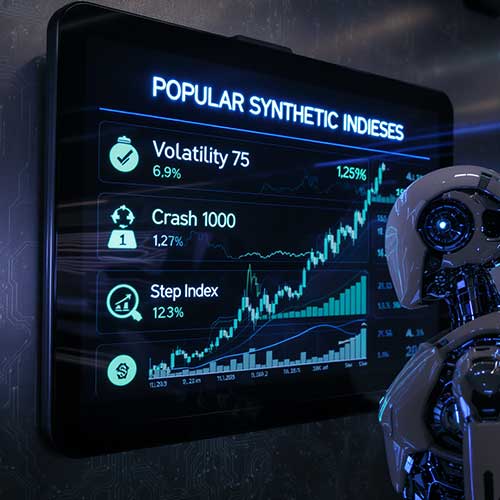
List of Popular Synthetic Indices
There are several types of synthetic indices, each with its own characteristics. Here’s a quick overview:
| Index Name | Volatility Level | Description |
|---|---|---|
| Volatility 75 Index | High | Popular for its strong price moves |
| Volatility 100 | Very High | Extreme volatility, big swings |
| Crash 1000 | Moderate | Simulates market crashes |
| Boom 1000 | Moderate | Simulates market booms |
| Step Index | Low | Small, steady price movements |
Pro Tip:
Start with the Volatility 75 Index if you want action, or the Step Index for a more controlled trading environment.

How to Trade Synthetic Indices for Beginners
If you’re new to synthetic indices, don’t worry. Here’s a step-by-step guide to get you started:
- Choose a reliable broker: Deriv is the most popular for synthetic indices.
- Open a demo account: Practice trading without risking real money.
- Learn the basics: Study price charts, candlestick patterns, and indicators.
- Develop a simple strategy: Start with basic support and resistance or moving averages.
- Manage your risk: Never risk more than 1-2% of your account per trade.
- Go live: Once you’re confident, switch to a real account and start small.
Common Mistakes to Avoid
- Over-leveraging your trades
- Ignoring risk management
- Chasing losses after a losing streak

Setting Up Your Trading Platform: MT5 and Beyond
Most synthetic indices are traded on the MetaTrader 5 (MT5) platform. Here’s how to get started:
- Download MT5: Available for Windows, Mac, and mobile devices.
- Log in with your broker credentials: Use your Deriv account details.
- Add synthetic indices to your watchlist: Search for “Volatility,” “Crash,” or “Boom” in the symbols list.
- Customize your charts: Add indicators, change timeframes, and set up templates.

Synthetic Indices Trading Strategies
Developing a solid synthetic indices trading strategy is key to long-term success. Here are some popular approaches:
1. Trend Following
- Use moving averages (e.g., 50 EMA and 200 EMA) to identify the trend.
- Enter trades in the direction of the trend after a pullback.
2. Breakout Trading
- Identify key support and resistance levels.
- Enter trades when price breaks out of these zones with strong volume.
3. Scalping
- Trade on lower timeframes (1m, 5m).
- Use fast indicators like RSI or Stochastic for quick entries and exits.
4. Range Trading
- Look for sideways markets.
- Buy at support, sell at resistance.

Risk Management in Synthetic Indices Trading
Risk management is the backbone of any successful trading plan. Here’s how to protect your capital:
- Set stop-loss orders: Always know your maximum risk per trade.
- Use proper position sizing: Adjust your lot size based on account balance.
- Diversify your trades: Don’t put all your capital into one index.
- Keep a trading journal: Track your wins, losses, and lessons learned.
| Risk Management Tool | Purpose |
|---|---|
| Stop-Loss | Limits potential losses |
| Take-Profit | Locks in profits |
| Trailing Stop | Protects gains as price moves |
| Risk-Reward Ratio | Ensures favorable trade setups |
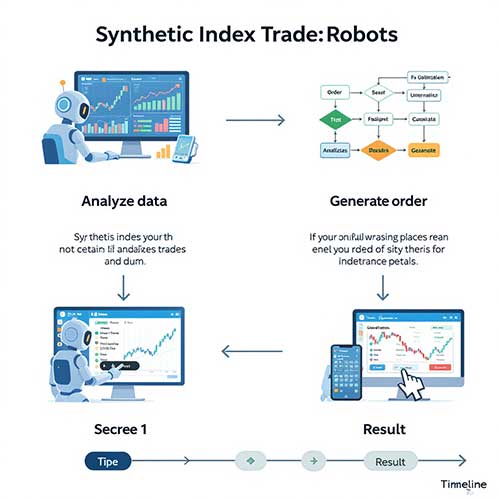
Synthetic Trading Example: Real-World Walkthrough
Let’s walk through a real example of trading the Volatility 75 Index:
- Identify the trend: The 50 EMA is above the 200 EMA, indicating an uptrend.
- Wait for a pullback: Price retraces to the 50 EMA.
- Enter the trade: Buy when a bullish candlestick forms at the EMA.
- Set stop-loss: Place it below the recent swing low.
- Set take-profit: Aim for a 2:1 risk-reward ratio.
Result:
If the trade goes in your favor, you’ll make twice as much as you risked. If not, your loss is limited.

Free Resources and Tools for Synthetic Indices Traders
There are plenty of free resources to help you master synthetic indices:
- Demo accounts: Practice risk-free on Deriv or other brokers.
- Trading indicators: Download free MT5 indicators for synthetic indices.
- Strategy PDFs: Access free guides and eBooks online.
- Community forums: Join trading groups for tips and support.
External Resource:
Investopedia: Synthetic Indices Explained – Learn more about the mechanics and uses of synthetic indices.

The Future of Synthetic Indices Trading
Synthetic indices are here to stay, and the future looks bright. With advancements in trading technology, more brokers are offering these instruments, and automated trading tools are becoming more sophisticated. Expect to see:
- AI-powered trading bots
- More diverse synthetic products
- Enhanced risk management features
- Greater transparency and regulation
FAQ: How to Trade Synthetic Indices
What is the best strategy for trading synthetic indices?
Trend following and breakout strategies are popular, but the best approach depends on your trading style and risk tolerance.
Can you trade synthetic indices?
Yes, anyone can trade synthetic indices through brokers like Deriv, using platforms such as MT5.
What’s the best time to trade synthetic indices?
Synthetic indices are available 24/7, so you can trade anytime. However, volatility may vary depending on the index.
Which broker is best for synthetic indices?
Deriv is the most widely used broker for synthetic indices, offering a range of products and a user-friendly platform.
Final Thoughts
Ready to start trading synthetic indices? With the right information and tools, you can take advantage of these unique markets and enhance your trading results. Have a comment or want to provide feedback? Leave a comment below! Be sure to pass this article along to others that might be interested in trading synthetic indices.
What do you know about synthetic indices? Have you tried to trade them, or are you new to it? Tell us in the comments!